Forehead Botox in Pittsburgh, PA
Horizontal forehead lines are caused by repeated elevation of the eyebrows — a movement we make countless times each day through facial expression. Over time, these repetitive contractions create visible lines that eventually remain even at rest. Forehead Botox at Rayhana Esthetics targets the frontalis muscle responsible for these lines, but requires a uniquely careful approach: the frontalis is also responsible for brow elevation, meaning over-treatment can cause brow heaviness or ptosis. Dr. Firas's physician-level expertise ensures this balance is maintained.
Why Forehead Botox Requires Special Care
The frontalis muscle is the primary brow elevator — the muscle responsible for raising your eyebrows. Treating forehead lines means reducing frontalis activity, which directly affects brow height. If too much Botox is used, or injections are placed too close to the brow, the result can be heavy, drooped brows that make patients look tired, stern, or unnatural.
This is one of the most common reasons patients seek corrections after treatment elsewhere. Many injectors use a standardized injection grid or fixed unit count without assessing the individual's frontalis anatomy, brow position, or resting muscle tone — leading to predictably poor outcomes.
Dr. Firas evaluates brow position, resting frontalis tone, and the relationship between forehead and glabellar muscle groups before treating any forehead lines. This assessment — which typically takes only a few minutes — determines appropriate dosing and injection placement to achieve smooth lines while preserving safe brow height.
The Relationship Between Forehead and Glabellar Lines
Forehead lines and glabellar lines (the 11s between the brows) are anatomically connected. The frontalis muscle (which lifts the brow and creates forehead lines) and the corrugator/procerus complex (which draws the brows together and creates glabellar lines) work as a functional pair.
Many patients — particularly those with heavier brows or a naturally lower brow position — are compensating for weak or absent glabellar muscle activity by chronically elevating their brows with the frontalis. Treating only the forehead in these patients can lead to brow drop.
Dr. Firas assesses both muscle groups together and often recommends treating the glabellar complex in combination with the forehead. By relaxing the brow depressors while conservatively treating the frontalis, he can achieve smoother foreheads, more open eyes, and a natural brow arch — simultaneously.
What Results Should I Expect?
With conservative, physician-guided forehead Botox, you can expect:
- Visible softening of horizontal forehead lines — both dynamic lines (visible during expression) and, with regular treatment, static lines (visible at rest) - Maintained or improved brow position — never a drooped or heavy brow - Natural-looking forehead movement — not a completely frozen or wax-like appearance - Gradual improvement of deeper static lines with consistent treatments over time
The goal is a smooth, relaxed forehead that still participates naturally in your expressions — looking refreshed rather than treated.
Forehead Botox in Pittsburgh, PA — Dr. Firas Abdulmajeed at Rayhana Esthetics
Forehead Botox is one of the most requested treatments at Rayhana Esthetics — and one of the most commonly performed incorrectly elsewhere. Brow heaviness, a frozen or wax-like forehead, and visible asymmetry are frequent complaints from patients who have been treated by injectors who lack the anatomical depth to individualize forehead treatment.
Dr. Firas Abdulmajeed, founder of Rayhana Esthetics in Allison Park, PA, brings a physician's rigor to every forehead treatment. His background in internal medicine, neurology, and neurocritical care means that when he assesses your frontalis muscle activity, brow resting position, and forehead anatomy, he is drawing on over 20 years of clinical neuromuscular training — not a weekend certification course.
Patients from Pittsburgh, the North Hills, Wexford, and Allegheny County consistently choose Rayhana Esthetics for forehead Botox because they want to look genuinely refreshed — not treated. If you are ready to address your forehead lines in the Pittsburgh area with a physician-led approach, call us at 412-487-8288 or book a consultation online.
Benefits of Forehead Botox in Pittsburgh, PA
- Smooths horizontal forehead lines without freezing natural expression
- Physician-assessed to protect brow position and prevent drooping
- Can be combined with brow lift and glabellar treatment for full upper face balance
- Quick treatment: 10–15 minutes with no downtime
- Preventive benefit with consistent treatment — reduces formation of deeper static lines
- Conservative dosing philosophy — you will never look overdone
Forehead Botox — Treatment Details at Rayhana Esthetics
- —Targets the frontalis muscle responsible for horizontal forehead lines
- —Always assessed in conjunction with brow position for safe, balanced results
- —Conservative dosing prevents brow heaviness or drooping
- —Treatment time: 10–15 minutes
- —Results typically last 3–4 months
Who Is a Good Candidate for Forehead Botox in Pittsburgh?
Forehead Botox is suitable for adults with visible horizontal forehead lines — either lines present during expression or static lines visible at rest. It is particularly appropriate for patients who notice their forehead lines make them appear tired, stressed, or older. A comprehensive assessment of brow position and muscle activity is essential before treatment. Patients with very low or heavy brows may require a different approach or combined treatment with glabellar relaxation to maintain safe brow position.
What to Expect at Rayhana Esthetics in Pittsburgh
Before Treatment
Dr. Firas will assess your forehead anatomy, brow position, and frontalis muscle strength at rest and in motion. This assessment informs precise dosing and injection placement. You will discuss your goals — whether you prefer a completely smooth result or prefer to maintain some visible movement. Blood-thinning medications should be avoided for several days before treatment.
During Treatment
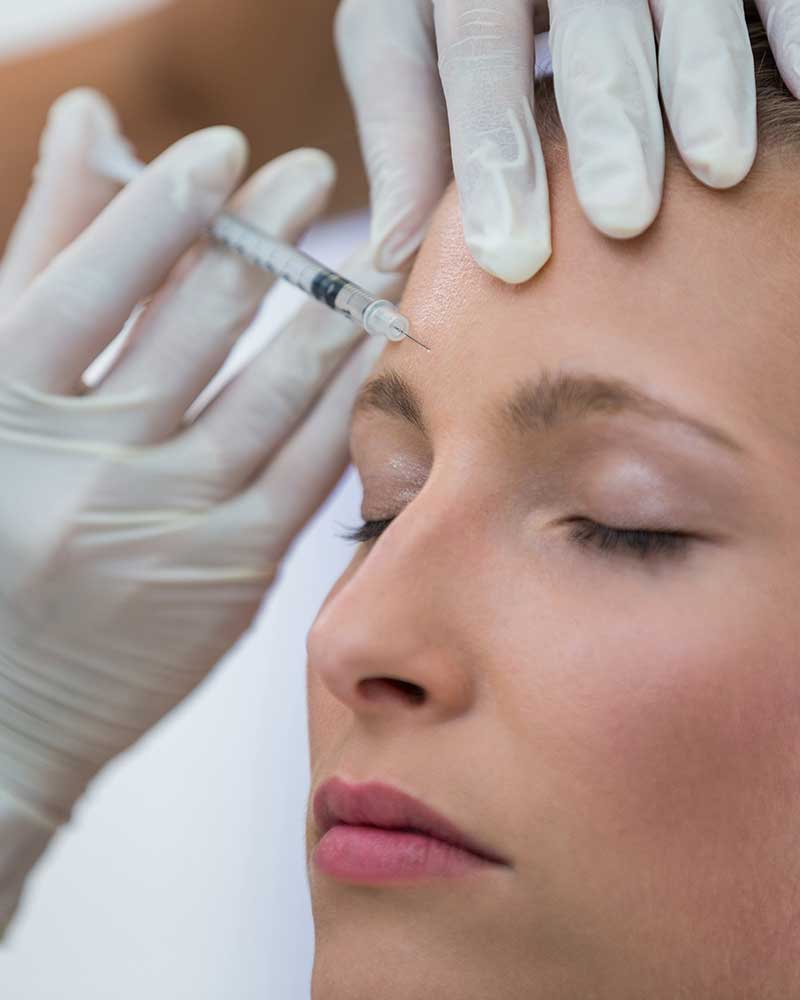
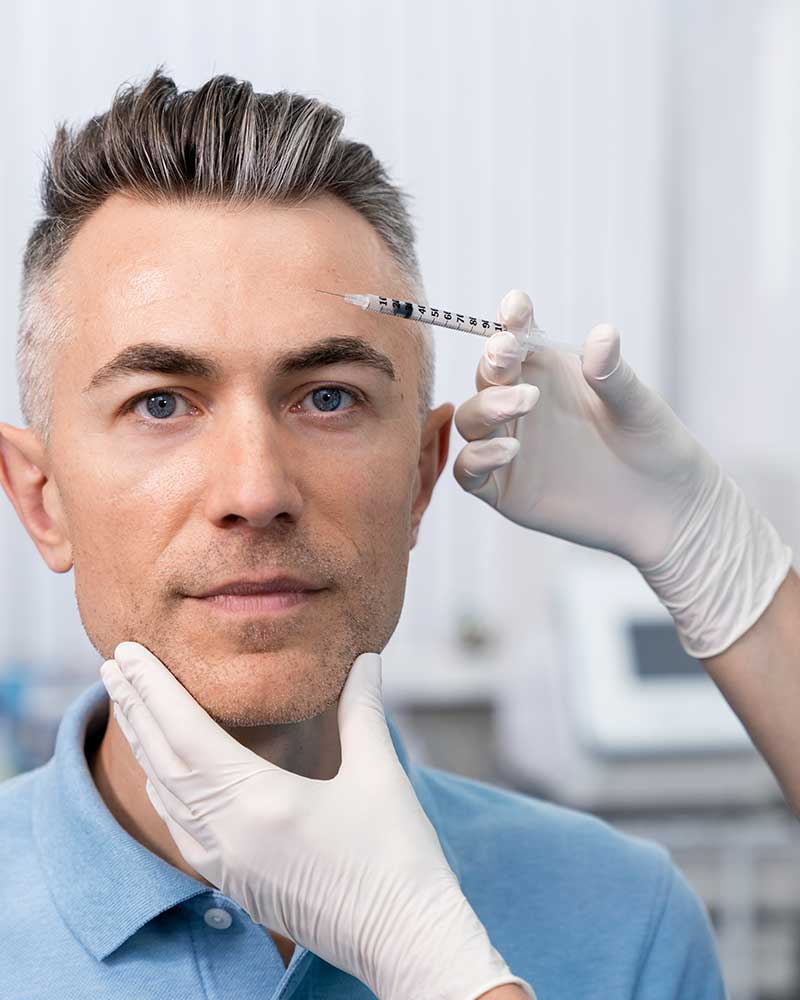
Injections are placed using ultra-fine needles at carefully selected points along the frontalis muscle. The number of injection points and the dose per point depend on your individual anatomy. The procedure takes 10–15 minutes and most patients find it well-tolerated without any numbing.
After Treatment
Minor redness or pinpoint bruising may occur but resolves quickly. Results begin appearing in 3–5 days with full effect at 14 days. It is important to follow up at 2 weeks so Dr. Firas can assess your brow position and forehead smoothing — and make any fine-tuning adjustments if needed.
Why Choose Dr. Firas Abdulmajeed at Rayhana Esthetics?
At Rayhana Esthetics in Allison Park — serving Pittsburgh and the greater Allegheny County area — every treatment is performed exclusively by Dr. Firas Abdulmajeed, a board-certified physician with over 20 years of experience in internal medicine, neurology, and neurocritical care. His medical background gives him an extraordinary depth of neuromuscular anatomical knowledge that directly translates into safer, more precise aesthetic outcomes.
Unlike medical spas staffed by nurse injectors or estheticians, a physician-led practice means every assessment, every treatment plan, and every injection is guided by the same level of medical judgment you would expect from any clinical encounter. Pittsburgh patients choose Dr. Firas because they trust that their care begins and ends with a physician — not a sales consultation, and not a delegated injection.
Dr. Firas believes in conservative, anatomy-based dosing and honest guidance. You will never be pushed toward treatments you do not need, and you will never leave looking overdone or unnatural. The goal is always to enhance your natural appearance — refined, not transformed.