
By Dr. Firas Abdulmajeed
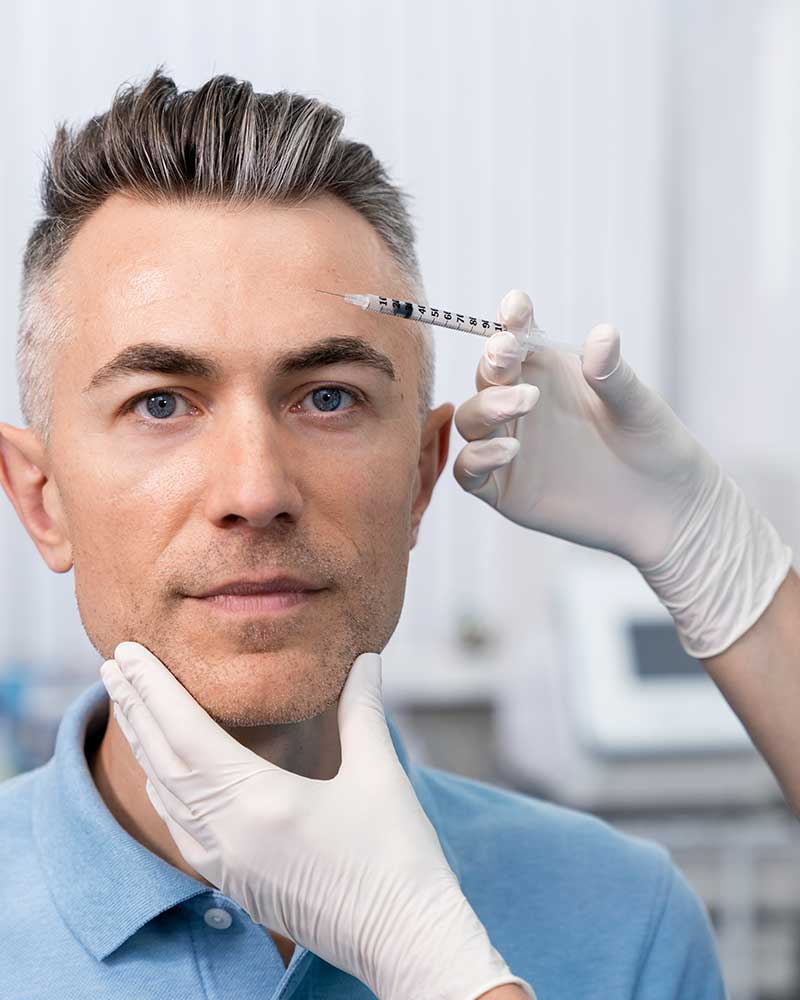
Nearly every patient considering Botox for the first time mentions the same fear: 'I don't want to look frozen.' It is the most common concern I hear, and it is completely valid — because frozen foreheads do happen, and they look exactly as bad as patients fear. But they are not inevitable, and they are not caused by Botox itself. They are caused by technique.
A frozen look occurs when too much Botox is placed in the wrong areas — specifically when the forehead is over-treated without accounting for the balance of muscles that work together to control brow position and expression. It is not the product's fault. It is a failure of technique, anatomy assessment, and dose calibration.
The forehead does not work alone. You have the frontalis muscle that lifts the brows, and you have opposing muscles — the corrugators, procerus, and orbicularis oculi — that pull the brows down. If we relax the frontalis too aggressively without addressing the downward-pulling muscles, the result is brow heaviness, a flat forehead, and that classic 'frozen' appearance.
When we treat the right muscles, in the right doses, with the right balance — the expressions stay natural, the brow maintains its natural position, and the forehead moves appropriately. The lines simply soften.
Every forehead is different. Forehead height, frontalis muscle strength and distribution, natural brow position, and how much movement the patient wants to preserve all vary significantly. Some patients benefit from a very light dose that softens lines while maintaining full expressive movement. Others benefit from treating the glabella and crow's feet at the same appointment to maintain the right muscular balance across the upper face.
Standardized protocols — 'X units here, Y units there' without individual assessment — are the primary cause of frozen foreheads. A personalized approach, based on a thorough assessment of your specific anatomy and expression goals, is what produces natural results consistently.
With precise placement, you will still raise your brows. You will still show surprise, concern, and all the expressions that make your face expressive. The deep creases simply soften. People will tell you that you look well-rested or refreshed — not that you look 'done.'
Your results will last about 3 to 4 months, gradually softening over time so your face never looks overdone at any point in the treatment cycle.
Forehead Botox at Rayhana Esthetics begins with a complete dynamic expression assessment — watching how your face moves before placing a single injection. Dr. Firas Abdulmajeed treats every patient individually. Book your free consultation.
At Rayhana Esthetics